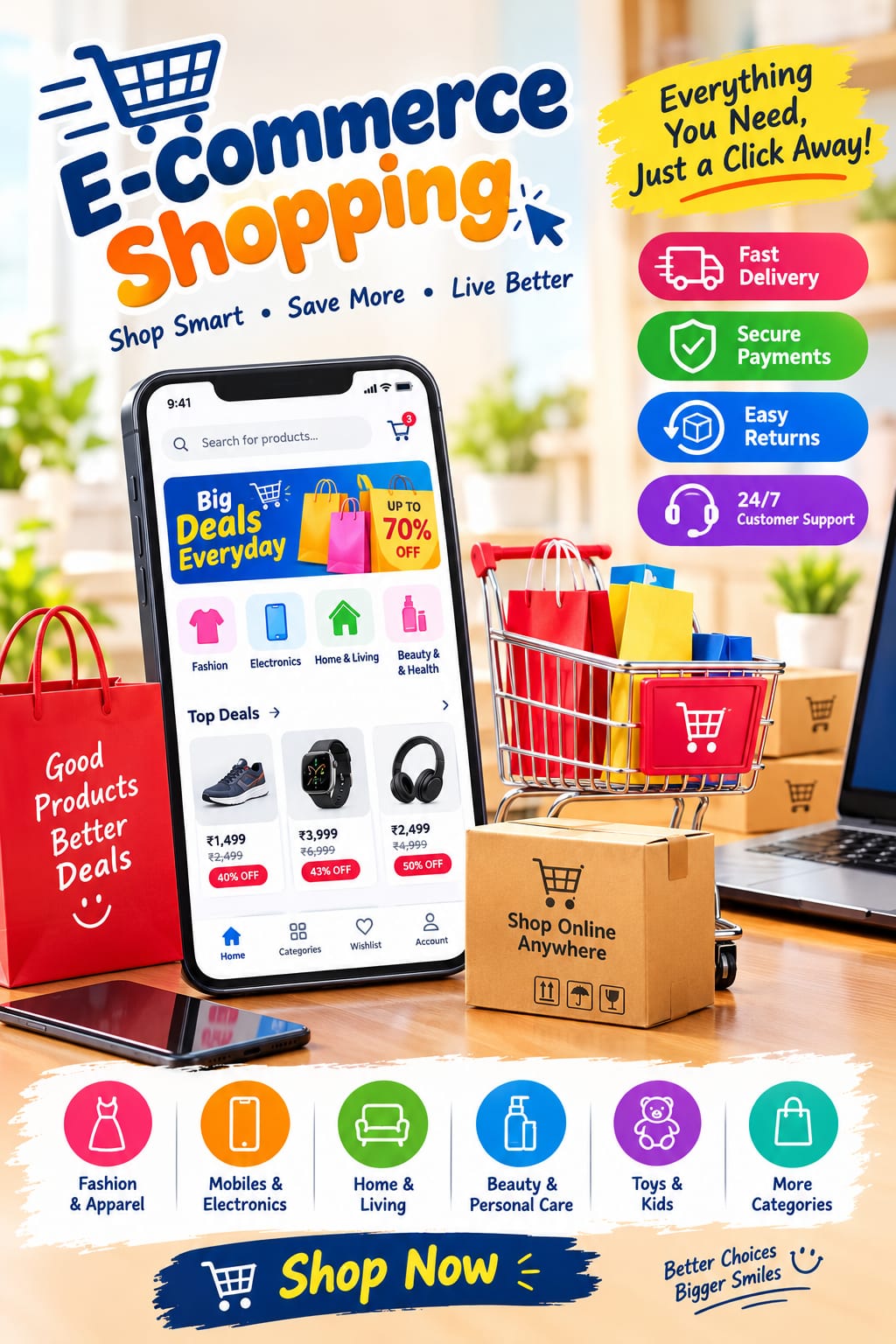
E-Commerce: A Complete Guide to Starting and Growing an Online Business
E-commerce has changed the way people buy and sell products. Today, customers can purchase everything from clothing and electronics to groceries and handmade products with just a few clicks. For entrepreneurs, this has created new opportunities to build businesses and reach customers beyond their local markets.
Whether you are planning to start an online store or already have a business, understanding the basics of e-commerce can help you make better decisions and build a stronger online presence.
What Is E-Commerce?
E-commerce, or electronic commerce, refers to buying and selling products or services through the internet.
An e-commerce business can operate through:
- Its own website
- Online marketplaces
- Social media platforms
- Mobile applications
- Other digital selling channels
Customers can browse products, compare prices, place orders, make payments, and receive products without visiting a physical store.
Why Is E-Commerce Important for Businesses?
The internet has made it possible for businesses to reach customers in different cities, states, and even countries.
Some important advantages of e-commerce include:
1. Wider Customer Reach
A physical shop generally serves customers within a specific geographical area. An online store can potentially reach customers across multiple locations.
2. Lower Operating Costs
Depending on the business model, an online business may require fewer physical resources than a traditional store. Entrepreneurs can choose a model that matches their budget and requirements.
3. Convenient Shopping
Customers can browse and purchase products at their convenience. This makes online shopping attractive for people with busy schedules.
4. Easy Product Discovery
Online stores can provide detailed information, images, specifications, reviews, and comparisons, helping customers understand products before purchasing.
5. Business Analytics
E-commerce platforms can provide useful information about visitors, orders, popular products, and customer behavior. Businesses can use this information to improve their strategies.
Common Types of E-Commerce
E-commerce businesses can operate in different ways.
Business-to-Consumer (B2C)
In B2C e-commerce, businesses sell products or services directly to individual customers.
For example, an online clothing store selling products directly to shoppers follows a B2C model.
Business-to-Business (B2B)
B2B businesses sell products or services to other businesses.
Examples include wholesale suppliers, software companies, manufacturers, and business service providers.
Consumer-to-Consumer (C2C)
In C2C commerce, individuals sell products or services to other individuals through an online platform.
Direct-to-Consumer (D2C)
D2C brands sell directly to customers instead of depending entirely on traditional distributors or retailers.
This model allows brands to communicate directly with their customers and build their own online presence.
How to Start an E-Commerce Business
Starting an online business doesn't necessarily require a large investment. However, proper planning is important.
Step 1: Choose a Product or Niche
Start by identifying what you want to sell.
Consider:
- Customer demand
- Competition
- Product quality
- Selling price
- Profit margins
- Shipping requirements
- Target customers
Choosing a specific niche can make it easier to understand your audience and create relevant marketing content.
Step 2: Research Your Market
Before investing money, research the market.
Look at competitors, product prices, customer reviews, common complaints, and current trends.
Customer reviews can be particularly useful because they can show what buyers like and dislike about existing products.
Step 3: Select Your Selling Platform
You can sell through your own website, online marketplaces, social media, or a combination of different channels.
Each option has different costs, features, audience access, and responsibilities.
Step 4: Create Product Listings
A good product listing should clearly explain what the customer is buying.
Include:
- Clear product title
- High-quality images
- Important specifications
- Key features
- Accurate pricing
- Product dimensions
- Shipping information
- Return information
Avoid making claims that cannot be supported.
Step 5: Set Up Payments and Delivery
Customers need a convenient and reliable checkout experience.
Depending on your business and location, you may provide options such as online payments, cards, digital payment methods, or cash on delivery.
You also need to plan packaging, shipping partners, delivery timelines, and return handling.
How to Attract Customers to an Online Store
Having an online store is only the beginning. Customers need to discover your products.
Search Engine Optimization
SEO can help your website appear when people search for relevant products or information.
Useful SEO practices include:
- Creating useful content
- Using relevant keywords naturally
- Optimizing product pages
- Improving website speed
- Creating clear page titles
- Making the website mobile-friendly
Social Media Marketing
Platforms such as Instagram, Facebook, YouTube, and other social channels can help businesses showcase products and communicate with potential customers.
Short videos, product demonstrations, educational content, customer stories, and behind-the-scenes content can all be used as part of a social media strategy.
Email Marketing
Email can help businesses stay connected with existing customers.
Businesses may use email to share:
- New products
- Special offers
- Helpful information
- Order updates
- Product recommendations
Customer Reviews
Reviews can provide useful information to potential buyers. Encourage genuine customers to share their experiences and make sure reviews are handled transparently.
Common E-Commerce Mistakes
New online businesses often focus heavily on getting sales while overlooking the overall customer experience.
Some common mistakes include:
Poor Product Images
Customers cannot physically examine an online product, so clear and accurate images are extremely important.
Incomplete Product Information
Missing dimensions, materials, specifications, or usage information can make customers uncertain about purchasing.
Complicated Checkout
If the checkout process is confusing or requires unnecessary steps, customers may leave before completing their order.
Ignoring Customer Service
Fast and helpful communication can make a significant difference in the customer experience.
Focusing Only on Discounts
Constantly competing on price can make it difficult to build a sustainable business. Product quality, service, trust, branding, and customer experience also matter.
How to Grow an E-Commerce Business
Once an online store starts receiving orders, the next goal is sustainable growth.
Businesses can focus on:
Improving product quality: Better products can lead to greater customer satisfaction.
Understanding customers: Study customer questions, reviews, purchases, and feedback.
Building a recognizable brand: Consistent visuals, communication, packaging, and service can help customers remember a business.
Expanding carefully: Introduce new products based on customer demand rather than adding too many products without a clear strategy.
Tracking performance: Monitor sales, conversion rates, advertising costs, returns, and other relevant business metrics.
The Future of E-Commerce
E-commerce continues to evolve as technology and customer expectations change. Businesses are increasingly using mobile shopping, social commerce, personalized experiences, automation, and data-driven decision-making.
For entrepreneurs, the opportunity is not simply to create an online store. The larger goal is to build a business that provides a useful product, a smooth shopping experience, and reliable customer service.
Final Thoughts
E-commerce provides entrepreneurs with a flexible way to introduce products to customers and build businesses online. However, success requires more than simply uploading products to a website.
Market research, good product presentation, customer service, digital marketing, reliable delivery, and consistent improvement all play an important role.
Whether you are starting with a small online store or planning a larger e-commerce brand, focus on understanding your customers and creating a trustworthy shopping experience. A strong foundation can help your online business grow over time.
Comments (0)
No comments yet. Be the first to comment below!
Leave a Comment
Your email address will not be published. Required fields are marked *